Local Leaders Reconsider Restrictions on Solar Development
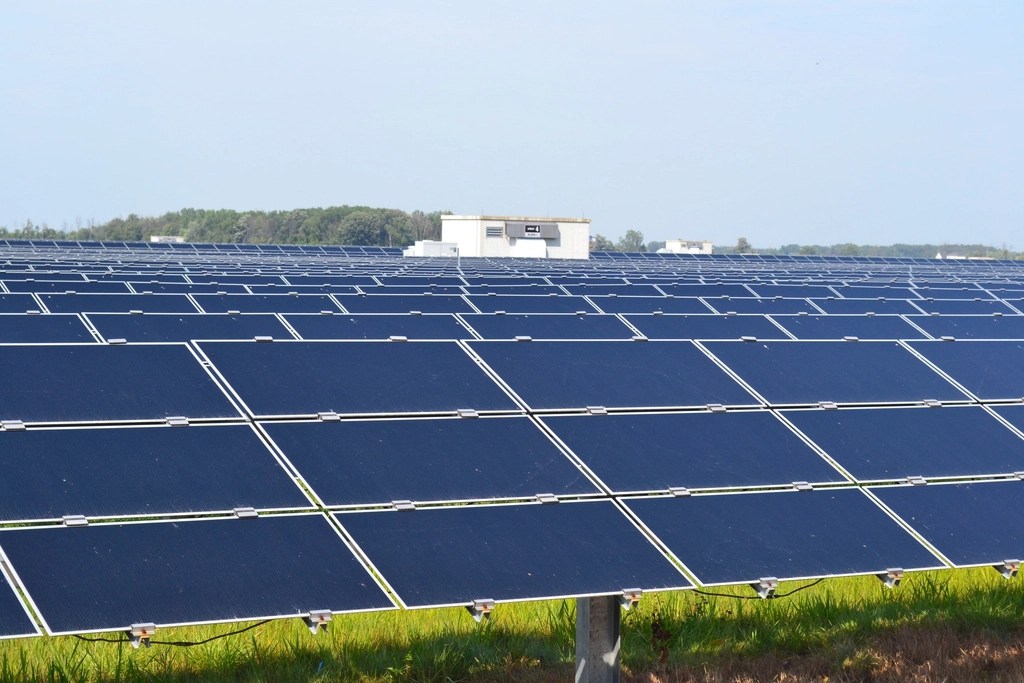
Huron County, long at the center of Michigan’s renewable energy debates, is once again revisiting its rules for solar development. After setting a 15,000 acre cap on solar projects last year, county officials are now weighing whether that restriction is too tight and whether new “host community payments” should be required for local jurisdictions.
The move has reignited debate over how much solar is too much, and whether local governments are striking the right balance between protecting farmland and supporting clean energy growth. (Huron Daily Tribune coverage)
The Acreage Cap Debate
In 2023, Huron County approved a cap limiting large scale solar development to 15,000 acres. Supporters argued it was necessary to prevent solar from consuming too much farmland and changing the county’s rural character. But critics, including renewable energy advocates, argued that the cap was arbitrary and risked shutting out investment at a time when Michigan is pushing for more renewable energy.
Now, as solar developers show continued interest in Huron County, officials are reconsidering whether the cap should remain in place.
Host Community Payments Enter the Conversation
One proposal being floated is to require developers to make host community payments, which are annual financial contributions to local jurisdictions where solar farms are located. These payments could help fund schools, infrastructure, and community services, softening opposition from residents who worry about bearing the costs of hosting solar facilities.
While payments like this are common in wind projects across the Midwest, Michigan has not seen them widely applied to solar. Some view them as a fair way to share benefits, while others worry they could simply drive developers away.
Risks of Overregulation
Energy experts caution that piling too many restrictions on solar development could backfire. Limiting acreage and adding financial obligations may discourage developers from investing in Michigan counties, redirecting projects to states with more predictable approval processes.
For Michigan households, that could mean slower progress toward affordable, locally generated clean energy. For farmers, it could mean missing out on long term lease income that often serves as a financial lifeline.
Farmland vs. Clean Energy: A Familiar Tension
The Huron County debate mirrors larger questions across Michigan. Residents worry about losing prime agricultural land, while the state has set ambitious renewable energy goals that cannot be met without more large scale solar projects.
Agrivoltaics, the practice of combining solar with crops or livestock, is sometimes suggested as a middle ground. While still in early stages in Michigan, researchers at Michigan State University point to promising data showing that dual use farming can protect yields while generating energy.
What Happens Next
County leaders have not finalized any changes yet, but the discussion signals a new phase in Michigan’s solar fight. Local governments are beginning to test out policies like acreage caps and host payments. The outcome in Huron County could serve as a blueprint or a cautionary tale for other counties facing similar pressures.
Sources
- Huron Daily Tribune: “Huron County reconsiders solar acreage cap” – https://www.michigansthumb.com/news/article/huron-county-solar-cap-21063319.php
- Michigan Advance: “Democrats push renewable siting reforms” – https://michiganadvance.com/2023/11/28/democrats-push-for-renewable-energy-siting-reforms-to-speed-up-clean-energy-transition/
- MSU Extension: “Agrivoltaics research in Michigan” – https://www.canr.msu.edu/news/agrivoltaics-combining-solar-and-agriculture
