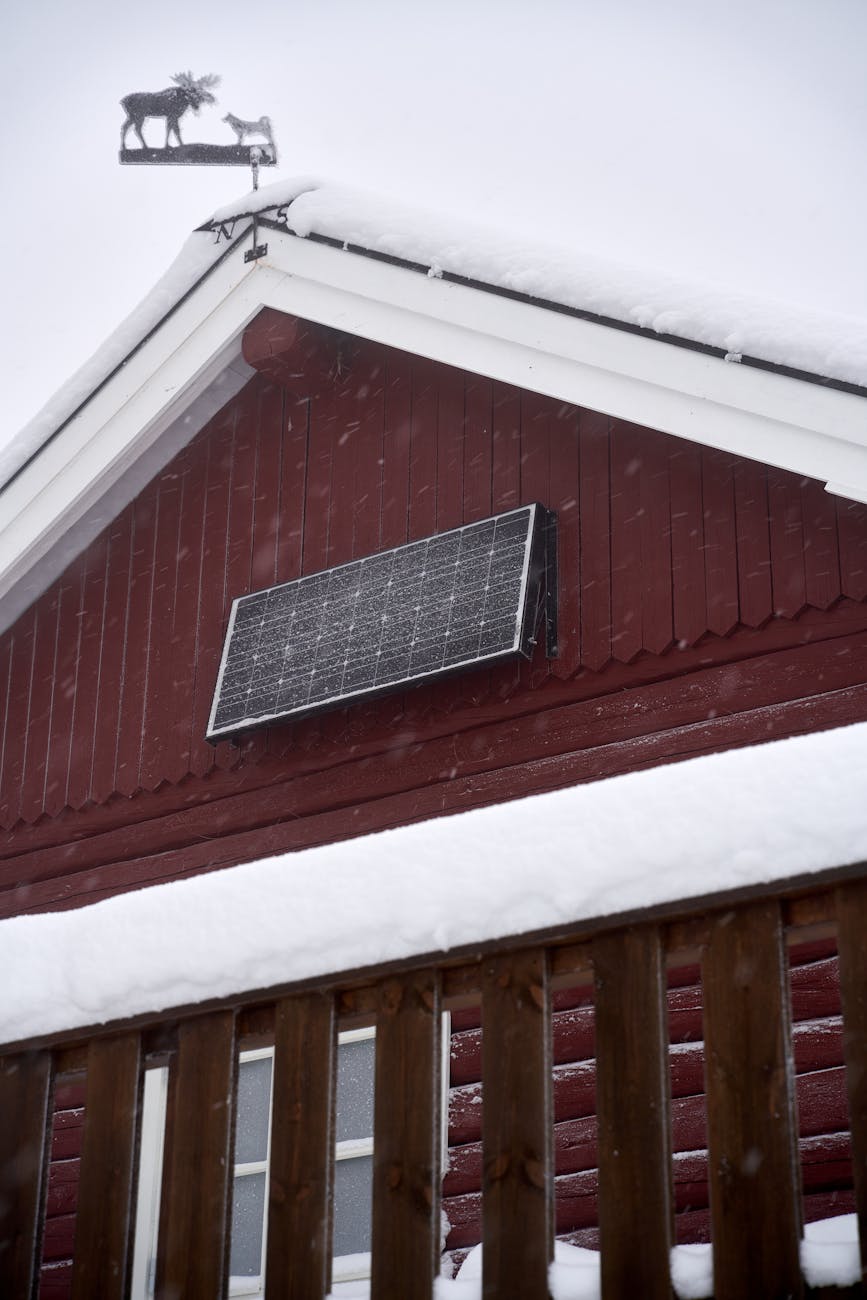
How Winter Weather Really Impacts Your Rooftop Solar Investment
Winter in Michigan brings snow, cold, and shorter days. If you are considering rooftop solar, you might worry that heavy snow will wipe out your savings or leave your system idle for months. The truth is more nuanced. Understanding how snow impacts solar panels, what the real losses are, and how to design systems for performance can make the difference between disappointment and a strong investment.
What Research Tells Us About Snow Loss on Solar Panels
- According to the National Renewable Energy Laboratory (NREL) snow-loss model, annual energy losses from snow cover vary widely by location, tilt and system design. In northern climates, losses can range from small single digits up to double-digit percentages in rare cases. Aurora Solar+2NREL Docs+2
- NREL also reports that heavy snow loads, ice formation or mechanical stress from repeated freeze-thaw events may contribute to long-term panel degradation. NREL+1
- For example one study by NREL found that systems exposed to snow depths greater than one metre experienced greater annual performance losses. Utility Dive
- System design has a material impact. Panels installed at steeper angles tend to shed snow faster. Panels facing south with sufficient tilt can reduce snow coverage and restore production more quickly. SolarAnywhere+1
These facts show that snow is a performance factor in Michigan but not necessarily a deal-breaker.
Myths and Over-reactions Homeowners Should Avoid
Myth 1: Snow will stop my solar system for months.
Reality: Most snow will slide off, melt or be cleared in days. Production reduction during a heavy snow month may occur but full months of zero output are rare.
Myth 2: Snow losses mean solar is not viable in Michigan.
Reality: Northern states successfully deploy rooftop solar and design for winter conditions. Losses can be managed through tilt, panel selection and design.
Myth 3: The installer will always specify the correct snow loss factor.
Reality: Some installers still use conservative generic estimates. Asking for specific snow-loss modeling for Michigan, rather than generic national values, improves accuracy.
Pro’s and Con’s of Snow Impact in Michigan
Pros
- Snow can brighten solar gain: fresh snow reflects light and can boost panel output in sunny winter days.
- Community awareness: homeowners in snowy states often install cleaning tools or panel tilt that improve winter performance year over year.
- Winter production adds diversity: even if output is lower, solar still contributes during clear cold days when heating loads are high.
Cons
- Snow staking reduces early morning and late afternoon generation until panels clear.
- Ice layers or repeated heavy snow may slightly accelerate degradation in poorly designed systems.
- If panels are flat or roof pitch is shallow, snow may stay longer, reducing early winter generation.
What Michigan Homeowners Should Ask Before Installing Solar
- What is the estimated annual energy production including site-specific snow loss modeling for my roof tilt and orientation?
- What panel tilt and mounting system is being used and how does it affect snow shedding?
- What is the installer’s stated snow-loss factor and is it based on Michigan conditions or generic national averages?
- Will system monitoring show when snow coverage is reducing output so I am aware of performance issues and possible cleaning needs?
- What is the warranty for panel performance and is it affected by weather- or snow-related degradation beyond standard conditions?
Asking these questions helps align expectations and minimizes surprises.
The Bottom Line for Michigan Solar Owners
Snow matters in Michigan, yet it should not derail your decision to install solar. What matters more is system design, tilt angle, and realistic loss estimates for winter months. With the right design and expectations, solar can still deliver strong value and resilience through Michigan winters. Homeowners who engage early, ask the right questions, and prepare for seasonal variation will find that solar is a reliable investment.
Sources:
- National Renewable Energy Laboratory, Integration, Validation and Application of a PV Snow Coverage Model. https://docs.nrel.gov/docs/fy17osti/68705.pdf
- Aurora Solar, Your Guide to Monthly Snow Loss Values from NREL. https://aurorasolar.com/blog/your-guide-to-monthly-snow-loss-values-from-nrel/
- NREL, How Extreme Weather and System Aging Affect the U.S. Photovoltaic Fleet. https://www.nrel.gov/news/detail/program/2024/how-extreme-weather-and-system-aging-affect-the-us-photovoltaic-fleet
- U.S. Department of Energy, Solar Photovoltaic Hardening for Resilience – Winter Weather. https://www.energy.gov/femp/solar-photovoltaic-hardening-resilience-winter-weather
- CleanPower Magazine, Reduce PV Performance Uncertainty with Snow-Loss Estimates. https://www.cleanpower.com/2021/reduce-pv-performance-uncertainty-with-specific-data-driven-snow-loss-estimates/
