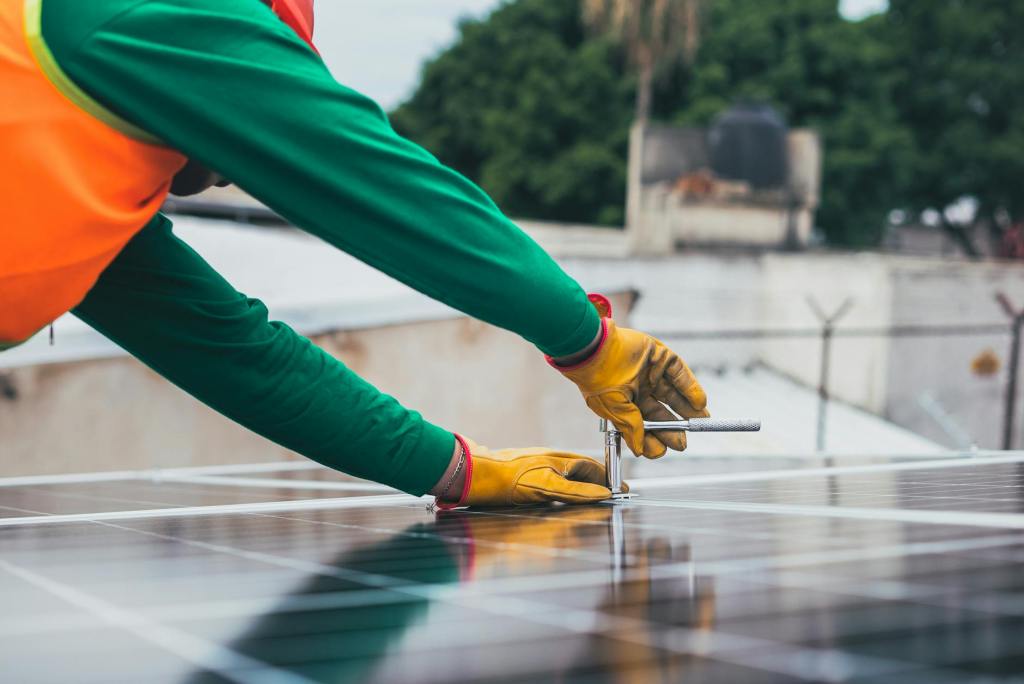
Labor Gaps Threaten to Slow Down Michigan’s Solar Expansion
As Michigan’s solar industry accelerates, a new problem is emerging that could limit growth: there are not enough trained workers to meet the demand for installation, maintenance, and project management. According to data from the Interstate Renewable Energy Council (IREC), the U.S. solar workforce grew by 7 percent in 2024, but Michigan’s growth rate lagged behind at just 3.5 percent.
The result is a widening labor gap. Solar companies across the state are struggling to find qualified electricians, engineers, and field technicians. The issue is especially pressing as Michigan moves to meet its goal of 60 percent renewable electricity by 2035. Without enough skilled labor, projects could face delays, higher costs, or even cancellations.
A Growing Market Without Enough Hands
Michigan currently employs about 5,800 solar workers, but industry analysts estimate the state will need more than 10,000 by 2027 to meet demand. Residential and utility-scale projects are both competing for the same limited pool of talent.
Solar installation companies in Lansing, Ann Arbor, and Grand Rapids report having to delay new projects for weeks or months due to labor shortages. “We have panels, we have customers, but we don’t have enough people to put them up,” said Ryan Walters, project manager at a mid-Michigan solar firm.
Training and Workforce Development Efforts
State and local initiatives are starting to address the shortage. The Michigan Department of Labor and Economic Opportunity (LEO) has launched training programs in partnership with community colleges and trade schools. These programs focus on solar installation, battery storage integration, and energy efficiency technologies.
The Future Energy Jobs Act and federal funding through the Inflation Reduction Act (IRA) are also providing grants for workforce development in clean energy. Apprenticeships through trade unions are expanding, but many of these programs take one to two years to produce fully certified electricians or technicians.
Opportunities for a New Generation
Experts say the workforce gap presents an opportunity for Michigan residents looking for stable, well-paying jobs. Entry-level solar installers earn between $19 and $25 per hour, and certified electricians can make significantly more.
As the industry grows, demand will expand beyond technical roles to include sales, logistics, project management, and quality assurance. “This is one of the fastest-growing career fields in Michigan,” said Sarah Coleman, director of workforce development at LEO. “The challenge is getting people trained quickly enough to keep up with demand.”
What Happens if the Shortage Continues?
If Michigan fails to close the labor gap, the impact could ripple through the entire clean energy economy. Delayed projects could reduce investor confidence and slow the rollout of community and utility-scale solar projects.
To avoid that outcome, solar companies are increasingly partnering with unions, schools, and workforce boards to create accelerated training pipelines. The state’s growing battery and EV industries are also helping attract younger workers who see clean energy as a long-term career.
Building the Future of Michigan Solar
Despite the challenges, Michigan’s solar sector continues to expand. With new state and federal investments, experts believe the workforce shortage can be overcome through coordinated training and education.
The coming years will determine whether Michigan can turn its clean energy potential into lasting economic growth. The workers who join the industry today will literally build the state’s renewable future.
Sources:
