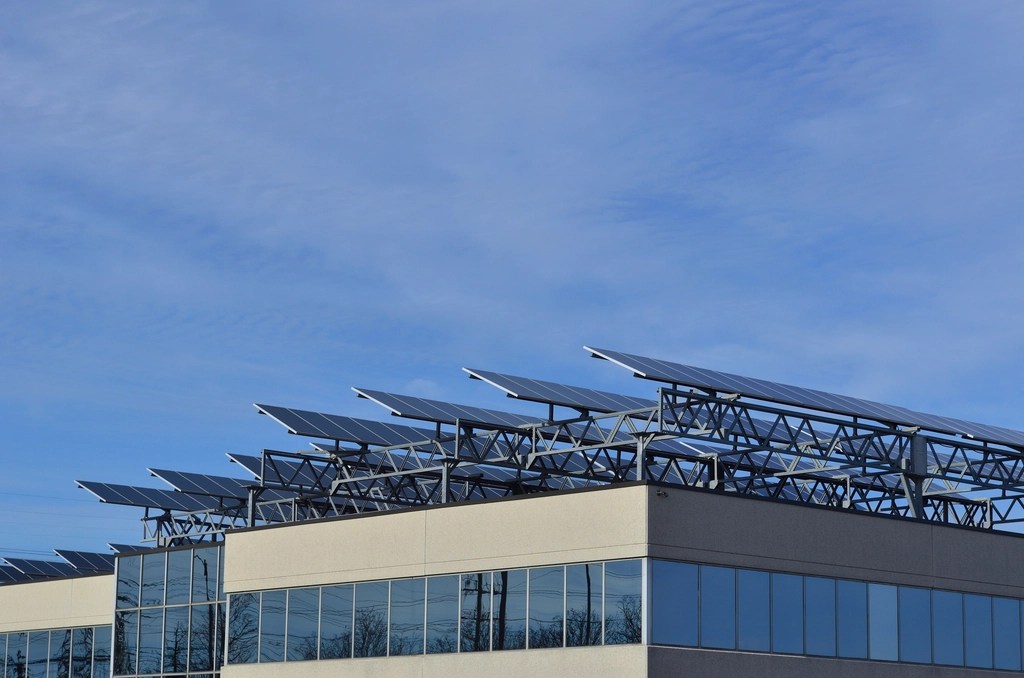
Local Rules, Statewide Consequences
St. Clair County recently adopted new guidelines for solar farm development, sparking both praise and concern. While some see these rules as protecting rural character and farmland, others argue they could stall Michigan’s push toward renewable energy at a time when momentum is critical.
The Times Herald reported that Annick Anctil, a professor of civil and environmental engineering at Michigan State University, weighed in on the potential risks. Her analysis highlighted the tension between local control and statewide energy policy. (Times Herald coverage)
What the Guidelines Include
- Stricter zoning requirements on where large solar farms can be located.
- Setback rules designed to keep projects away from homes and roads.
- Aesthetic and environmental standards that developers must meet.
Supporters argue these rules protect property values, preserve rural landscapes, and address community concerns about glare, wildlife impact, and farmland loss.
The Risks of Overregulation
- Bottlenecking solar growth: Restrictive local ordinances can slow or even stop projects that meet state energy targets.
- Investment flight: Developers may skip Michigan counties with tough zoning in favor of areas with streamlined approval.
- Climate delay: Michigan has aggressive clean energy goals. If every county adopts rules like St. Clair, progress could stall.
Anctil cautioned that balancing concerns with Michigan’s energy needs is critical. If local restrictions become too burdensome, the state risks falling behind in its clean energy commitments.
A Statewide Pattern Emerging
St. Clair is not alone. Across Michigan, counties are introducing similar guidelines. The University of Michigan’s Center for Local, State, and Urban Policy has documented dozens of townships adopting restrictive solar rules, creating a patchwork that complicates project development.
Meanwhile, Democrats in Lansing passed legislation allowing some projects to bypass local rules and go directly to state approval. But the tension between local pushback and state authority continues to grow.
Why This Matters for Everyday Michiganders
- Fewer local jobs if projects are delayed or canceled.
- Slower path to lower bills since utility-scale solar is one of the cheapest forms of new electricity.
- Climate risks as Michigan faces hotter summers, severe storms, and rising Great Lakes levels linked to climate change.
The debate in St. Clair County is not just local politics. It is a preview of how Michigan will balance community concerns with the urgent need for clean energy.
Sources
- Times Herald: St. Clair County adopts new solar guidelines, expert weighs in — https://www.thetimesherald.com/story/news/local/michigan/2025/06/26/solar-farm-guidelines-st-clair-county/
- University of Michigan CLOSUP: Local government solar ordinances in Michigan — https://closup.umich.edu/research/publications/local-government-solar-energy-survey
- Michigan Advance: Democrats push renewable siting reforms — https://michiganadvance.com/2023/11/28/democrats-push-for-renewable-energy-siting-reforms-to-speed-up-clean-energy-transition/
