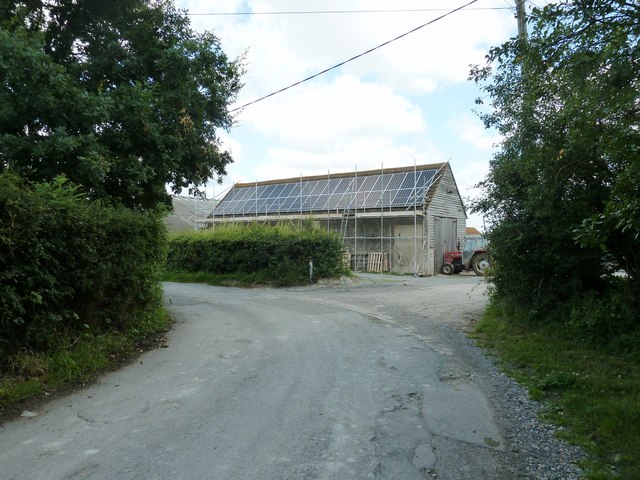
Project Overview and Local Backlash
A 225 MW solar project is being proposed across Hamlin, Brookfield, and Springport Townships in Mid Michigan, led by Hecate Energy. The developer says the plan will bring jobs and clean energy, but local residents are pushing back hard (WILX).
At a public forum, residents voiced frustration that the developer is “putting panels right in my backyard” without adequate input. One Hamlin Township resident said they have not been heard. Others in Springport cited loss of farmland as the biggest concern (WILX).
The company has held “open house” style meetings and says more formal public input will follow (WILX).
Context: Hecate’s Track Record and State Scale Projects
This is not Hecate’s first Michigan project. Earlier in 2025, Hecate and Consumers Energy broke ground on Sunfish Solar 2, a 360 MW project in Calhoun County (Hecate Energy). That project is projected to power about 69,000 homes and generate significant local economic impact (PR Newswire).
Bechtel was selected as the EPC contractor for Sunfish Solar 2 (Bechtel). Construction Dive reports that the project’s costs are around $453 million and cover 1,300 acres (Construction Dive).
The Mid Michigan project could be viewed as part of Hecate’s broader pipeline and ambition to scale in Michigan, making this a particularly important test case.
Key Issues and Inferred Risks
Farmland Conversion and Economic Trade Offs
Residents fear prime farmland will be lost forever. This is no small issue in Michigan, where agriculture is both economically and culturally significant.
A recent modeling study, Optimizing Utility Scale Solar Siting, shows that when converting farmland, the opportunity cost (lost agricultural output) can reduce the local benefit per megawatt by up to 16 percent, depending on land productivity. Counties with lower farmland productivity tend to yield higher net benefit for solar installations (arXiv).
Thus, if this project uses highly productive land, local economies may end up worse off than projected benefits alone imply.
Transparency and Community Trust
Residents feel sidelined. The informal meeting format has frustrated neighbors who want structured forums and responses to collective concerns rather than piecemeal conversations (WILX).
If the developer fails to cultivate trust, pushback could lead to permit delays, legal challenges, or scaled back plans.
Zoning, Permits, and Multi Jurisdiction Complexity
Because the project spans multiple townships, each with their own land use rules, zoning, and permit review processes, coordinating approvals will be complex. Conflicting rules or strong opposition in one township could hold up the whole project.
Zoning barriers already constrain solar growth. A study covering thousands of Great Lakes region local governments found that solar zoning ordinances reduce potential deployment of utility scale PV by 52 percent compared to unregulated build (arXiv).
Public Benefit versus Private Gain
How benefits such as tax revenue, lease payments, and grid access are distributed matters. If locals feel the project mostly benefits outsiders, resentment will intensify.
The success of Sunfish Solar 2 will be watched closely. If its economic claims deliver real value for counties and townships, it may bolster credibility for this project.
What It Could Mean for Michigan and Beyond
- If this project proceeds with strong local engagement and fair benefit sharing, it could become a template for midrange counties wanting solar without outright opposition.
- If it fails or becomes heavily scaled back, it could fuel resistance in other rural communities.
- This might influence state level siting laws or zoning preemption debates, including whether Michigan should streamline approvals for clean energy despite local pushback. The Michigan Public Service Commission now has expanded authority over large scale projects.
- It emphasizes that solar growth in Michigan is not just about panels and incentives. Land, local rules, trust, and economic balance will determine who wins and who loses.
Could Agrivoltaics Be the Middle Ground?
One of the biggest criticisms of large solar projects is the loss of productive farmland. But Michigan researchers and farmers are increasingly looking at agrivoltaics as a solution. Agrivoltaics is the practice of combining solar panels with agriculture, allowing land to be used for both energy production and farming.
Studies from Michigan State University and other institutions show that certain crops like leafy greens, berries, and even grazing livestock can thrive under or around solar arrays. Panels provide shade that reduces water evaporation, protects crops from extreme weather, and creates additional revenue streams for farmers.
In fact, a 2022 MSU study found that agrivoltaics can increase yields of some crops by up to 20%, while also generating clean power. Farmers also benefit from more stable income, since solar lease payments are typically guaranteed over decades.
For communities like Hamlin, Brookfield, and Springport Townships, agrivoltaics could offer a compromise: protecting farmland while also contributing to Michigan’s clean energy goals. The challenge will be whether developers, policymakers, and local officials embrace dual-use farming models rather than treating solar and agriculture as opposing forces.
Sources
- WILX – Proposed solar farm spans multiple Mid Michigan Counties (Sep 2025)
- Hecate Energy – Consumers Energy and Hecate Energy Break Ground on Sunfish Solar 2 (Jan 2025)
- PR Newswire – Consumers Energy and Hecate Energy Break Ground on Sunfish Solar 2
- Bechtel – Hecate Energy Selects Bechtel for Sunfish Solar 2 Facility
- Construction Dive – Bechtel to Build $453M Michigan Solar Project
- arXiv – Optimizing Utility Scale Solar Siting for Local Economic Benefits (2025)
- arXiv – Implications of Zoning Ordinances for Rural Utility Scale Solar Deployment (2024)
