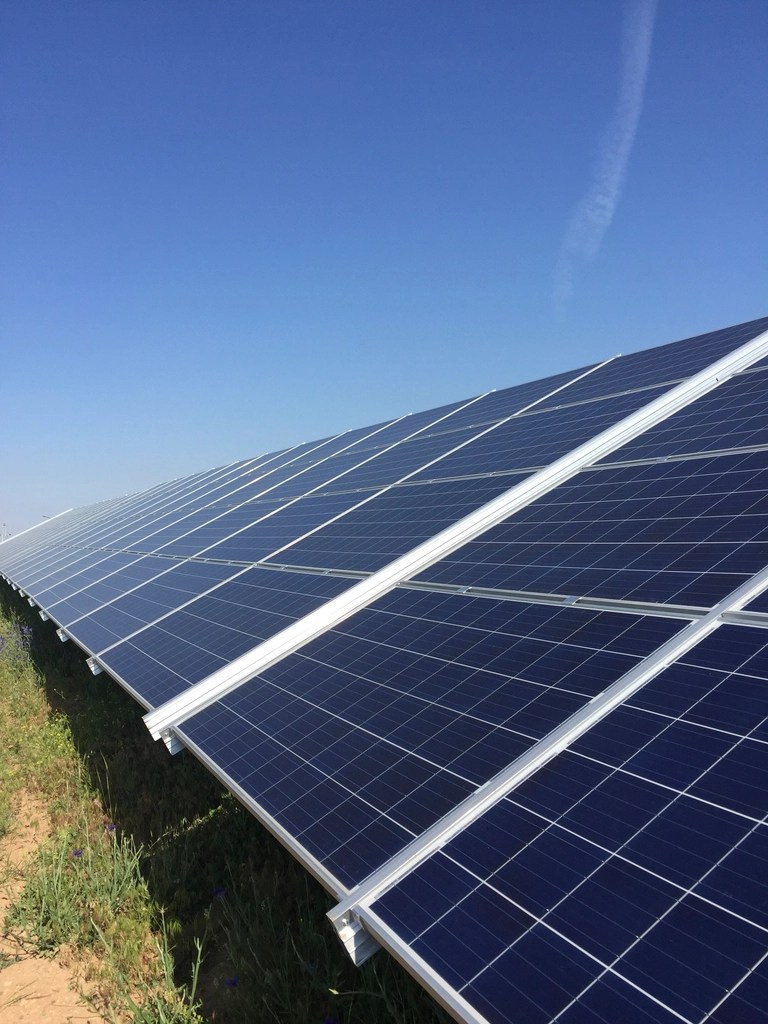
Huron County’s new solar ordinance ignites debate over farmland, local control, and renewable energy policy in Michigan. Explore the good, the bad, and the future of agrivoltaics and solar development across the Midwest.
The Good
On August 26, Huron County commissioners approved a new solar and battery storage ordinance that mirrors Michigan state guidelines. Leaders stressed that aligning with state standards preserves local control of solar projects and prevents Lansing from overriding county zoning authority (Michigan’s Thumb). By acting proactively, Huron secured the power to shape renewable energy development on its own terms.
Michigan State University is also advancing agrivoltaics research, testing how solar panels and crops such as alfalfa can coexist on the same land. Early studies point to dual income for farmers, water conservation, and pollinator benefits, offering a solution to farmland versus solar conflicts (MSU Extension).
The Bad
Public response revealed growing division. Nearly a dozen residents attended the meeting, and nine spoke out against the ordinance. Concerns focused on farmland preservation, rising utility costs, property rights, and lack of transparency in the process (Michigan’s Thumb). For many, large-scale solar remains an unwanted replacement for agriculture rather than a complement.
This conflict extends beyond Huron County. Across the Great Lakes region, local zoning ordinances have reduced utility-scale solar deployment potential by 52%, driving up the cost of decarbonization by as much as 5.6%. These figures show the clash between local land-use resistance and Michigan’s broader renewable energy transition.
The Future Outlook
Michigan State University’s agrivoltaic trials demonstrate that solar can protect crop yields, diversify farmer income, and improve resilience under Michigan’s variable climate (WCMU). This dual-use approach is gaining traction as a way to balance clean energy goals with agricultural traditions.
Meanwhile, new research suggests prioritizing solar in lower-productivity agricultural counties could boost Michigan’s overall economic returns. Yet if opposition escalates, developers may shift projects to Ohio or Indiana, slowing Michigan’s renewable leadership in the Midwest (arXiv research).
Key trends to watch:
- Agrivoltaics adoption to align energy and farming on shared acres.
- Stronger community engagement to build trust and reduce opposition.
- Strategic siting debates as counties balance local economics with statewide energy mandates.
Impacts on Other Regions
Similar zoning debates are emerging across the Midwest. Northern Indiana and rural Wisconsin face pushback from agricultural stakeholders, while areas with less contested farmland are moving solar projects forward. For Michigan, the lesson is clear: equitable solar growth depends on ordinances that balance local autonomy with statewide renewable energy goals.
Conclusion
The Huron County solar ordinance highlights a statewide crossroads for Michigan’s renewable energy policy. The state must expand solar to meet climate targets while protecting farmland and community trust. Agrivoltaics provides a proven path forward, but only with transparent planning, early engagement, and responsible siting. Without those measures, Michigan risks losing projects to neighboring states and weakening its position in the Midwest’s clean energy future.
References
- Michigan’s Thumb – Solar ordinance dominates Huron County meeting
- MSU Extension – Researchers explore viability of agrivoltaics in Michigan
- WCMU – Farming under solar panels: MSU researchers test a new model
- arXiv – Spatial trade-offs of solar siting in the Midwest
