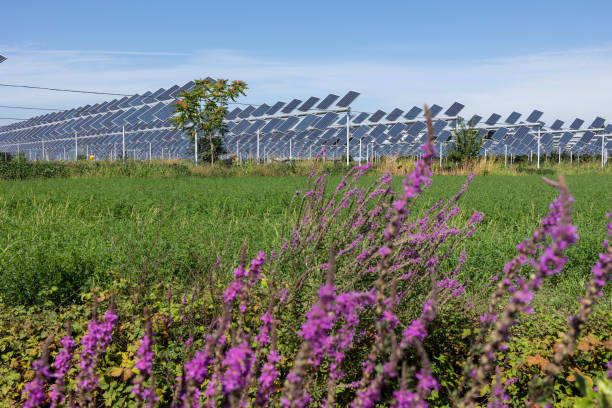
Description:
Can solar panels and crops thrive together? Discover how agrivoltaics is flipping the script on agriculture and renewable energy, fueling the future of food and clean power like never before.
Introduction
Picture this: sprawling farmland covered in glistening solar panels, while crops grow underneath in perfect harmony. Sounds futuristic, right? Think again—agrivoltaics is already transforming how we think about energy and food production. This cutting-edge approach turns traditional land use on its head, proving you don’t have to choose between farming and clean energy anymore. As we face rising energy demands and climate crises, agrivoltaics stands out as the ultimate win-win solution. Let’s dive into why this innovation is the hottest thing in sustainability right now.
1. What Is Agrivoltaics? A Revolution in Dual-Use Land
Agrivoltaics combines agriculture and photovoltaics, enabling farmers to grow crops beneath solar panels while generating renewable energy. This concept shatters the idea that farmland must be solely for farming or energy production—it can do both!
Key Features:
- Solar panels strategically elevated to allow sunlight to filter through to crops.
- Panels provide shade, reducing heat stress on plants.
- Energy produced goes directly into powering farms or the grid.
In essence, agrivoltaics is flipping the script on how we think about land use—turning a limitation into an opportunity.
2. Why Agrivoltaics Is a Game-Changer
This isn’t just a cool idea—it’s a practical solution to real-world problems. Here’s why it’s gaining traction:
A. Boosts Crop Yields in Hot Climates
Under extreme heat, plants often struggle to thrive. Solar panels provide partial shade, which can:
- Reduce water evaporation.
- Create a more stable microclimate.
- Improve yields for certain crops like lettuce, tomatoes, and berries.
B. Supercharges Renewable Energy Goals
With agrivoltaics, you get clean energy production on the same land as food production. No need to convert farmland into solar farms—you’re doubling the impact of every acre.
C. Increases Farmer Income
Farmers can sell surplus solar energy back to the grid while still growing crops. This means:
- A steady secondary income.
- Less financial strain during poor harvest seasons.
3. The Science Behind Agrivoltaics
Let’s break down why agrivoltaics works so well:
- Light Diffusion: Solar panels scatter sunlight, allowing crops to receive the right mix of direct and diffused light.
- Temperature Regulation: The shade from panels reduces soil temperature, protecting heat-sensitive plants.
- Energy Feedback Loops: Panels can power irrigation systems, reducing reliance on fossil fuels.
This synergy isn’t just theoretical—it’s backed by studies proving increased productivity of both crops and solar systems.
4. Real-World Success Stories
A. The USA: Solar Grazing
In places like Colorado, farmers are using agrivoltaics to grow forage crops for grazing livestock under solar arrays. Sheep graze happily while maintaining the land around solar panels.
B. Japan: Rice Farming Meets Solar
Japanese agrivoltaic projects are integrating rice paddies with solar panels, achieving higher yields and energy efficiency.
C. France: Vineyards and Solar Synergy
France’s renowned wine regions are experimenting with solar panels over vineyards, enhancing grape quality while producing clean energy.
5. Challenges and Solutions
Like any innovation, agrivoltaics isn’t without its hurdles:
A. Installation Costs
Challenge: Setting up solar panels over farmland can be pricey.
Solution: Government incentives and tax credits are helping farmers offset these costs.
B. Crop-Specific Success
Challenge: Not all crops thrive in shaded environments.
Solution: Research is identifying the best crop-panel pairings, ensuring optimal yields.
C. Maintenance and Management
Challenge: Balancing energy production with agricultural activities requires planning.
Solution: Specialized designs and automation technology make management easier.
6. The Future of Agrivoltaics: What’s Next?
Agrivoltaics is still in its early stages, but its potential is enormous:
- Scaling Globally: Countries are incorporating agrivoltaics into renewable energy goals.
- Technological Advances: Innovations in panel design (e.g., bifacial panels) are improving efficiency.
- Climate Adaptation: With extreme weather events becoming more frequent, agrivoltaics offers a way to make farming more resilient.
Imagine a future where every farm generates food and energy simultaneously. That’s the power of agrivoltaics.
Conclusion: A Bright, Sustainable Future
Agrivoltaics isn’t just a trend—it’s a revolution that’s rewriting the rules of land use, energy production, and agriculture. With its ability to tackle food insecurity, energy demands, and climate change head-on, agrivoltaics offers an exciting glimpse into a future where innovation and sustainability go hand in hand.
So, what’s next? It’s time for policymakers, farmers, and innovators to embrace agrivoltaics and push the boundaries of what’s possible. The age of choosing between food or energy is over—now, we can have both.
References:
- NREL: Agrivoltaics Overview
- SEIA: Solar and Agriculture Synergies
- EnergySage: How Agrivoltaics Works
- Nature: Benefits of Agrivoltaic Systems
- US DOE: Advancing Agrivoltaics in the U.S.
