Introduction
As the demand for renewable energy soars, innovators are exploring creative ways to overcome land limitations and maximize energy output. Enter floating solar farms—an emerging solution that leverages water surfaces to generate clean energy while providing unique environmental and economic benefits. This article delves into how floating solar farms work, their advantages, challenges, and their potential to shape the future of sustainable energy.
1. What Are Floating Solar Farms?
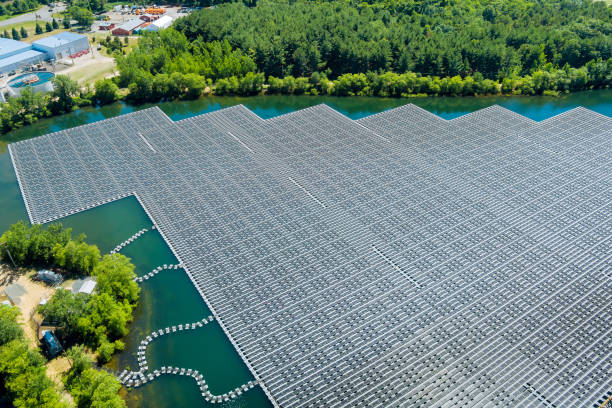
Floating solar farms, or floatovoltaics, are solar power installations mounted on floating platforms. These platforms are typically anchored on water bodies such as:
- Lakes
- Reservoirs
- Ponds
- Dams
Key Components:
- Solar Panels: Installed on floating platforms.
- Anchors and Moorings: Stabilize the system against wind and water currents.
- Inverters and Cables: Convert and transmit energy to the grid.
This innovative design utilizes underused water bodies, sparing valuable land for agriculture or urban development.
2. Advantages of Floating Solar Farms
Floating solar farms offer numerous benefits over traditional land-based systems:
Environmental Benefits:
- Reduced Land Use: Saves arable land and prevents deforestation.
- Cooling Effect: Water naturally cools solar panels, improving efficiency by up to 15%.
- Algae Control: Reduces sunlight penetration, curbing algae growth in reservoirs.
Economic Benefits:
- Increased Energy Output: Improved efficiency leads to greater energy generation.
- Multipurpose Use: Coexists with existing hydropower plants, boosting energy production.
- Cost Savings: Minimizes land acquisition costs.
Social Benefits:
- Preservation of Ecosystems: Minimizes disruption to terrestrial habitats.
- Community Integration: Often benefits local populations by supplying clean energy and job opportunities.
3. Challenges of Floating Solar Farms
Despite their advantages, floating solar farms face unique challenges:
Technical Challenges:
- Corrosion and Durability: Constant exposure to water requires specialized, robust materials.
- Anchoring Systems: Designing moorings for varying water levels and conditions can be complex.
Environmental Concerns:
- Ecosystem Impact: Potential disruption to aquatic ecosystems if not properly planned.
- Water Quality: Platforms can affect oxygen levels and temperature in water bodies.
Financial Barriers:
- High Initial Costs: Floating solar systems are generally more expensive to install than ground-mounted ones.
- Maintenance Costs: Increased wear and tear require regular inspections and maintenance.
4. Global Adoption of Floating Solar Farms
Countries around the world are adopting floating solar farms as part of their renewable energy strategies:
- China: Leads globally with large-scale projects like the 150 MW system in Anhui province.
- Japan: Pioneered floating solar to address land scarcity, with installations across reservoirs.
- India: Actively investing in floating solar to support its renewable energy goals.
- United States: Exploring floating solar potential in states like California and Florida.
Case Study:
The Kayamkulam Floating Solar Project in India spans 350 acres of water surface, producing 100 MW of power annually. This project demonstrates how floating solar can transform underutilized water bodies into clean energy hubs.
5. The Future of Floating Solar Farms
Floating solar farms represent a promising frontier in renewable energy. Future advancements could include:
- Integration with Other Technologies: Combining solar with battery storage or offshore wind farms.
- Scalability: Developing cost-effective methods to scale installations.
- Policy Support: Governments implementing incentives to encourage adoption.
With strategic investments, floating solar could contribute significantly to global clean energy goals.
Conclusion
Floating solar farms offer a revolutionary solution to the challenges of land use, energy demand, and environmental conservation. By harnessing underutilized water bodies, this innovative technology can provide sustainable, high-efficiency energy while addressing ecological concerns. However, overcoming technical, financial, and environmental challenges will be critical to unlocking their full potential. As global adoption accelerates, floating solar farms are set to play a pivotal role in the renewable energy landscape.
References
- World Economic Forum: How Floating Solar Can Help Meet Rising Energy Demand
- Solar Energy Industries Association (SEIA): Floating Solar Technology Overview
- National Renewable Energy Laboratory (NREL): The Potential of Floating Solar
- International Energy Agency (IEA): Trends in Floating Solar Farms
- EnergySage: Pros and Cons of Floating Solar Farms
