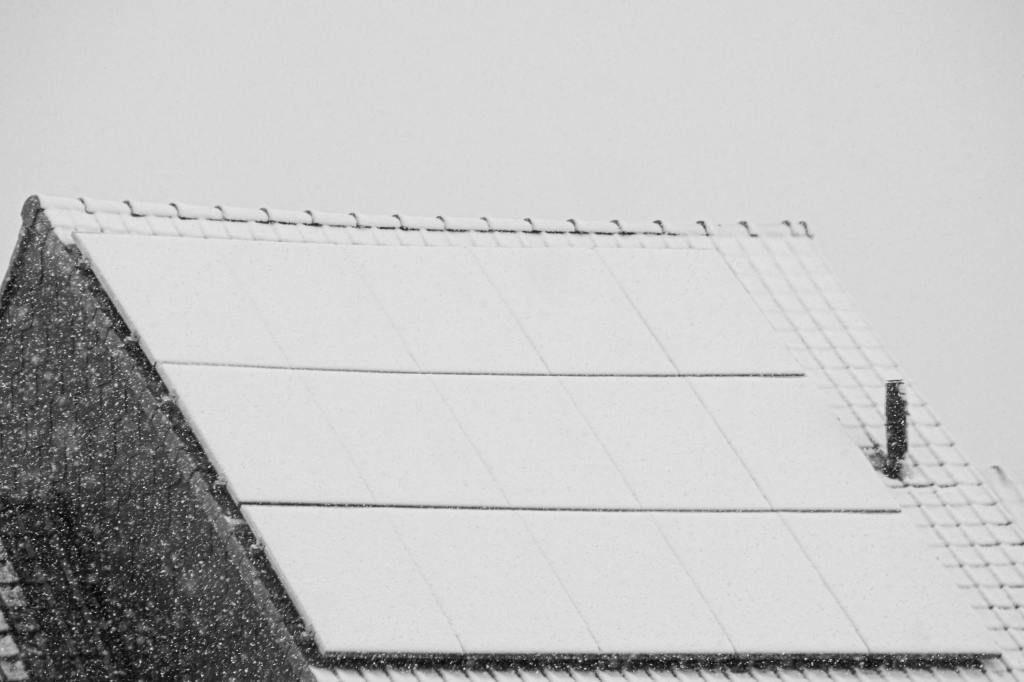
When you think of solar panels, the image that likely comes to mind is a bright, sunny day with panels gleaming under the clear blue sky. However, this image doesn’t fully capture the remarkable versatility of modern solar technology. Solar panels are far more resilient and efficient than most people realize, and they can generate electricity even in cloudy, rainy, or snowy conditions.
This comprehensive guide will cover everything you need to know about how solar panels work in less-than-sunny weather, including:
- The Science Behind Solar Energy Production
- How Clouds Affect Solar Panel Performance
- Efficiency of Solar Panels in Rain
- Solar Energy Production in Snowy Conditions
- Advancements in Solar Panel Technology
- Case Studies: Solar in Cloudy and Snowy Climates
- Practical Tips for Maximizing Solar Efficiency in Poor Weather
By the end of this article, you’ll have a deeper understanding of why solar is a year-round, all-weather energy solution.
1. The Science Behind Solar Energy Production
To understand how solar panels can function in cloudy, rainy, or snowy weather, we first need to grasp the basic principles of how they work.
How Do Solar Panels Generate Electricity?
Solar panels rely on photovoltaic (PV) cells, which are made of semiconductor materials like silicon. When sunlight hits these cells, it excites electrons, causing them to move and create an electric current. This process, called the photovoltaic effect, is the foundation of solar energy production.
The key takeaway? Solar panels convert light into electricity, not heat. This means that even when the sun isn’t shining brightly, there’s still light—albeit diffused—available to power your solar system.
Photons and Electricity Generation
Solar panels generate electricity by capturing photons, the basic particles of light. Even on cloudy days, photons penetrate clouds and reach the earth’s surface. While the intensity of sunlight decreases, it doesn’t disappear altogether. According to NASA, as much as 80% of sunlight can still pass through thin clouds, and even thick clouds allow 10–25% of sunlight to reach the ground.
Key Stats:
- Direct sunlight: Produces the most energy, with maximum panel efficiency.
- Diffuse sunlight (cloudy days): Panels operate at 10–50% efficiency, depending on cloud density.
2. How Clouds Affect Solar Panel Performance
It’s no secret that clouds reduce the amount of sunlight hitting solar panels, but how significant is the impact?
Solar Panel Efficiency on Cloudy Days
Modern solar panels are designed to be highly efficient, even in less-than-ideal conditions. On a cloudy day, panels may produce 10–25% of their peak capacity, depending on the thickness of the cloud cover. This might seem like a sharp drop, but over the course of a year, it has minimal impact on total energy production.
For example:
- In cities like Seattle, known for frequent cloud cover, solar systems still produce 60–70% of their maximum potential energy output annually.
- A study by the National Renewable Energy Laboratory (NREL) showed that some regions with heavy cloud cover (e.g., Germany) achieve comparable solar efficiency to sunnier areas through technology optimization.
Enhancing Cloudy-Day Performance
Certain technologies can improve the performance of solar panels on cloudy days:
- Monocrystalline Solar Panels: These panels are known for their superior efficiency in low-light conditions, achieving rates of up to 22% efficiency.
- Microinverters: By optimizing the output of individual panels, microinverters help maximize energy production, even when some panels are shaded or receiving less light.
- Anti-Reflective Coatings: These coatings allow panels to absorb more diffused sunlight.
How Solar Tracking Systems Help
Solar tracking systems adjust the angle of panels to follow the sun’s trajectory throughout the day. While they are most effective in direct sunlight, tracking systems can also improve performance on cloudy days by optimizing the angle at which panels receive diffused light.
Case in Point:
In cloudy regions like the Pacific Northwest, tracking systems have increased energy output by up to 15%, according to EnergySage.
3. Efficiency of Solar Panels in Rain
Rainy weather presents unique challenges and opportunities for solar panels. While rain clouds reduce the intensity of sunlight, rainfall itself can be beneficial.
The Impact of Rain on Solar Panel Performance
Rain clouds reduce solar panel efficiency in the same way that other clouds do, limiting energy production to 10–30% of maximum output. However, rain provides two key advantages:
- Cleaning Panels Naturally: Dust, dirt, and pollen can accumulate on solar panels, reducing their efficiency by up to 20%. Rain acts as a natural cleaning agent, washing away debris and restoring the panels’ ability to absorb sunlight effectively.
- Reflective Properties of Wet Surfaces: When surfaces become wet, they can reflect additional light onto solar panels, slightly boosting energy production during breaks in the rain.
Technologies for Rainy Climates
Innovative solar panel technologies are being developed to improve performance in rainy conditions:
- Hydrophobic Coatings: These coatings repel water, ensuring that droplets don’t obscure the panel’s surface.
- Bifacial Solar Panels: These panels generate electricity from both sides, capturing reflected light from wet surfaces below.
4. Solar Energy Production in Snowy Conditions
Snow might seem like a solar panel’s worst enemy, but it can actually help panels perform more efficiently under the right conditions.
Snow’s Reflective Benefits
Snow has a high albedo, meaning it reflects a significant amount of sunlight. This reflection can boost the amount of light hitting solar panels, enhancing energy production. In fact, studies have shown that light reflected from snow can increase energy output by 5–10% under optimal conditions.
Solar Panels and Snow Accumulation
When snow accumulates on panels, it can temporarily block sunlight. However, several factors help minimize this issue:
- Tilted Panels: Most solar installations are angled, allowing snow to slide off naturally.
- Dark Surface of Panels: Solar panels absorb heat from sunlight, even in cold weather, causing snow to melt more quickly.
- Self-Cleaning Designs: Many modern panels feature smooth surfaces that prevent snow from sticking.
Case Study: Solar Panels in Alaska
Alaska receives long, harsh winters with heavy snowfall. Despite this, solar adoption is growing rapidly in the state. Panels installed at optimized angles and with tracking systems have achieved 70–80% efficiency during the winter months (Alaska Solar Energy Association).
5. Advancements in Solar Panel Technology
Technological innovations continue to make solar panels more efficient in cloudy, rainy, and snowy weather.
Breakthroughs in Solar Cell Design
- Perovskite Solar Cells: These next-generation cells are highly efficient in diffused light conditions and are expected to outperform traditional silicon panels.
- Tandem Solar Cells: By layering multiple materials, these cells can capture a broader spectrum of light, improving performance on cloudy days.
AI and Weather Optimization
Artificial intelligence (AI) systems are now being integrated with solar installations to predict weather patterns and optimize panel performance in real-time.
6. Case Studies: Solar in Cloudy and Snowy Climates
Germany: The Cloudy Solar Leader
Germany receives less sunshine annually than Seattle but produces more solar energy per capita than any other country. By adopting high-efficiency panels and government incentives, Germany has shown that cloudy climates are no barrier to solar success (Clean Energy Wire).
Solar in the U.S. Pacific Northwest
States like Oregon and Washington have embraced solar despite frequent rain and overcast skies. In these regions, microinverters and tracking systems have boosted average annual energy output by 10–20% compared to fixed systems.
7. Practical Tips for Maximizing Solar Efficiency in Poor Weather
- Choose High-Efficiency Panels: Monocrystalline panels are the best choice for cloudy or snowy climates.
- Invest in Microinverters: These devices optimize output from individual panels, ensuring better performance during shading or overcast conditions.
- Keep Panels Clean: Regular cleaning, combined with natural rainfall, can maximize energy output.
Conclusion
Solar panels are far more adaptable than many people realize, thriving in diverse weather conditions, from cloudy skies to snow-covered landscapes. With modern advancements and strategic installation, solar energy is a year-round solution for powering homes and businesses—even in the most challenging climates.
References
- National Renewable Energy Laboratory (NREL): Comprehensive research on solar panel efficiency in various weather conditions.
- EnergySage: Expert guides on solar technology, financing, and performance.
- Clean Energy Wire: Insights into Germany’s success as a cloudy solar leader.
- Energy.gov: U.S. Department of Energy resource on solar performance in snowy climates.
- SolarReviews: Maintenance tips for maximizing solar efficiency year-round.
- Alaska Solar Energy Association: Case studies on solar adoption in snowy regions.
