Article Overview
As energy costs rise and environmental concerns grow, more Michigan businesses are turning to solar power to reduce expenses and demonstrate their commitment to sustainability. This guide covers the key benefits of solar energy for Michigan businesses, from financial savings to tax incentives, and provides insights on costs, installation options, and long-term ROI. For Michigan business owners, investing in solar can be a strategic move to cut costs, improve brand image, and achieve energy independence.
1. Introduction: Why Michigan Businesses are Going Solar
Solar power offers a sustainable and financially savvy energy solution for businesses across Michigan. Whether it’s a small retail shop or a large industrial facility, solar energy can reduce operating costs, stabilize energy expenses, and appeal to eco-conscious consumers. With Michigan’s incentives and the potential for long-term savings, now is an excellent time for businesses to consider solar.
2. Key Benefits of Solar Energy for Michigan Businesses
Solar power offers a range of advantages for businesses looking to improve their bottom line and reduce their environmental impact:
- Reduced Operating Costs: Solar energy can cut electricity expenses by generating free power from sunlight, especially for businesses with high daytime energy use.
- Protection from Rising Energy Prices: By generating their own electricity, businesses can stabilize energy costs and protect themselves from future rate hikes.
- Positive Environmental Impact: Solar energy reduces carbon emissions, supporting Michigan’s environmental goals and enhancing a business’s commitment to sustainability.
- Enhanced Brand Image: More consumers and clients are choosing businesses that prioritize eco-friendly practices. Solar power can boost a business’s appeal to these audiences.
3. Types of Solar Installations for Businesses
Michigan businesses have several options for solar installation depending on their facility type, energy needs, and available space.
- Rooftop Solar: Rooftop installations are popular for businesses with adequate roof space. They use existing structures, minimizing land use and maximizing exposure to sunlight.
- Ground-Mounted Solar: For businesses with open land, ground-mounted systems offer flexibility and can be scaled to meet high energy demands. They are ideal for larger facilities or manufacturing sites.
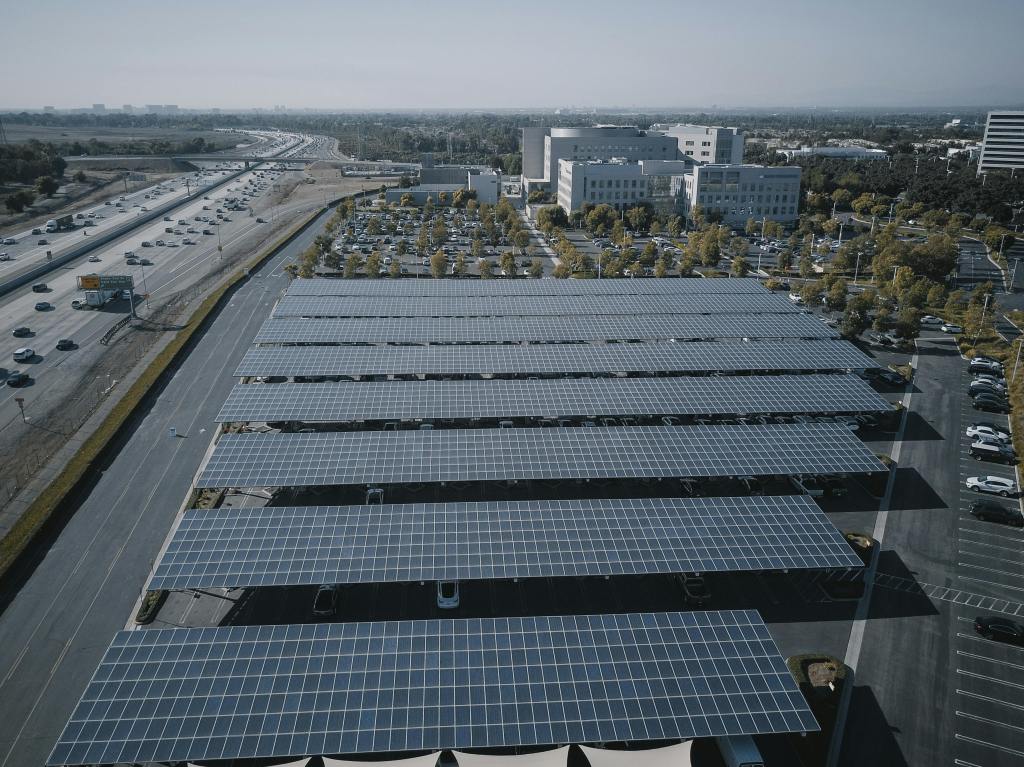
- Solar Carports: Solar carports provide shade for parking lots while generating electricity. This option is popular for businesses with large parking areas and offers dual functionality.
4. Financial Incentives and Tax Benefits for Michigan Businesses
Several financial incentives are available to Michigan businesses investing in solar power, helping to reduce the upfront cost and improve ROI.
- Federal Investment Tax Credit (ITC): Businesses can claim a 30% tax credit on solar installation costs under the federal ITC, making solar investment more affordable.
- MACRS Depreciation: The Modified Accelerated Cost Recovery System (MACRS) allows businesses to deduct solar installation costs over a five-year period, accelerating ROI.
- Michigan-Specific Incentives: Some Michigan utility companies offer rebates and incentives for commercial solar installations. Checking with providers like Consumers Energy and DTE can help businesses explore local savings.
- PACE Financing: The Property Assessed Clean Energy (PACE) program enables businesses to finance solar installations through a property tax assessment, with repayment terms that align with energy savings.
5. Understanding the Costs of Commercial Solar Installation
While the costs of commercial solar installation can vary, the investment generally pays off over time through energy savings and incentives.
- Average Costs: Commercial solar installations range from $50,000 to $500,000 depending on the system size, type, and installation complexity.
- ROI Considerations: Most businesses see a return on investment within 5-10 years, particularly when factoring in the ITC, MACRS depreciation, and energy savings.
- Maintenance Costs: Solar systems require minimal maintenance, typically costing about $1,000 per year. Many companies offer maintenance packages as part of installation contracts.
6. Solar Battery Storage for Michigan Businesses
Adding battery storage can increase a solar system’s value by providing backup power during outages and optimizing energy use during peak hours.
- Benefits of Battery Storage: Batteries allow businesses to store excess energy, reducing reliance on the grid during peak hours and providing backup power during outages.
- Battery Costs and Incentives: Solar battery storage can add to installation costs, but the ITC applies to battery storage when paired with solar. Battery systems range from $10,000 to $100,000 depending on capacity.
7. How Solar Power Boosts a Business’s Corporate Social Responsibility (CSR)
Adopting solar power is an effective way for businesses to enhance their CSR efforts and meet sustainability goals. Here’s how:
- Environmental Leadership: Businesses that adopt solar show a commitment to reducing greenhouse gases and supporting renewable energy.
- Stakeholder Appeal: Customers, employees, and investors are increasingly looking to support companies with eco-friendly practices. Solar power demonstrates a company’s long-term dedication to the planet.
- Transparency in Reporting: Solar power allows businesses to report concrete sustainability metrics in CSR reporting, appealing to stakeholders and clients focused on environmental impact.
8. Steps to Go Solar for Michigan Businesses
Moving forward with solar can be streamlined by following these key steps:
- Evaluate Energy Needs: Conduct an energy audit to understand your current and future electricity needs.
- Get Site Assessments: Consult with a commercial solar provider to assess your facility’s solar potential and receive an estimate.
- Explore Financing Options: Take advantage of federal tax credits, PACE financing, and utility incentives to optimize savings.
- Install and Monitor: Once installed, set up monitoring to track energy production, measure savings, and ensure peak performance over time.
9. Conclusion: Solar Power is a Smart Business Investment in Michigan
Solar power offers Michigan businesses a strategic opportunity to reduce energy expenses, enhance brand image, and support the state’s clean energy goals. By taking advantage of tax incentives and financial benefits, Michigan businesses can achieve a favorable return on investment and showcase their commitment to sustainability. For businesses ready to go green, investing in solar power can be a powerful step toward financial and environmental benefits.
